Understanding OOP Concepts

In software development, programming paradigms play a significant role in determining how developers approach solving problems. Two prominent paradigms are Object-Oriented Programming (OOP) and Procedural Programming (PP). Let’s dive into their differences and explore the foundational concepts of OOP.
Key Differences Between OOP and Procedural Programming
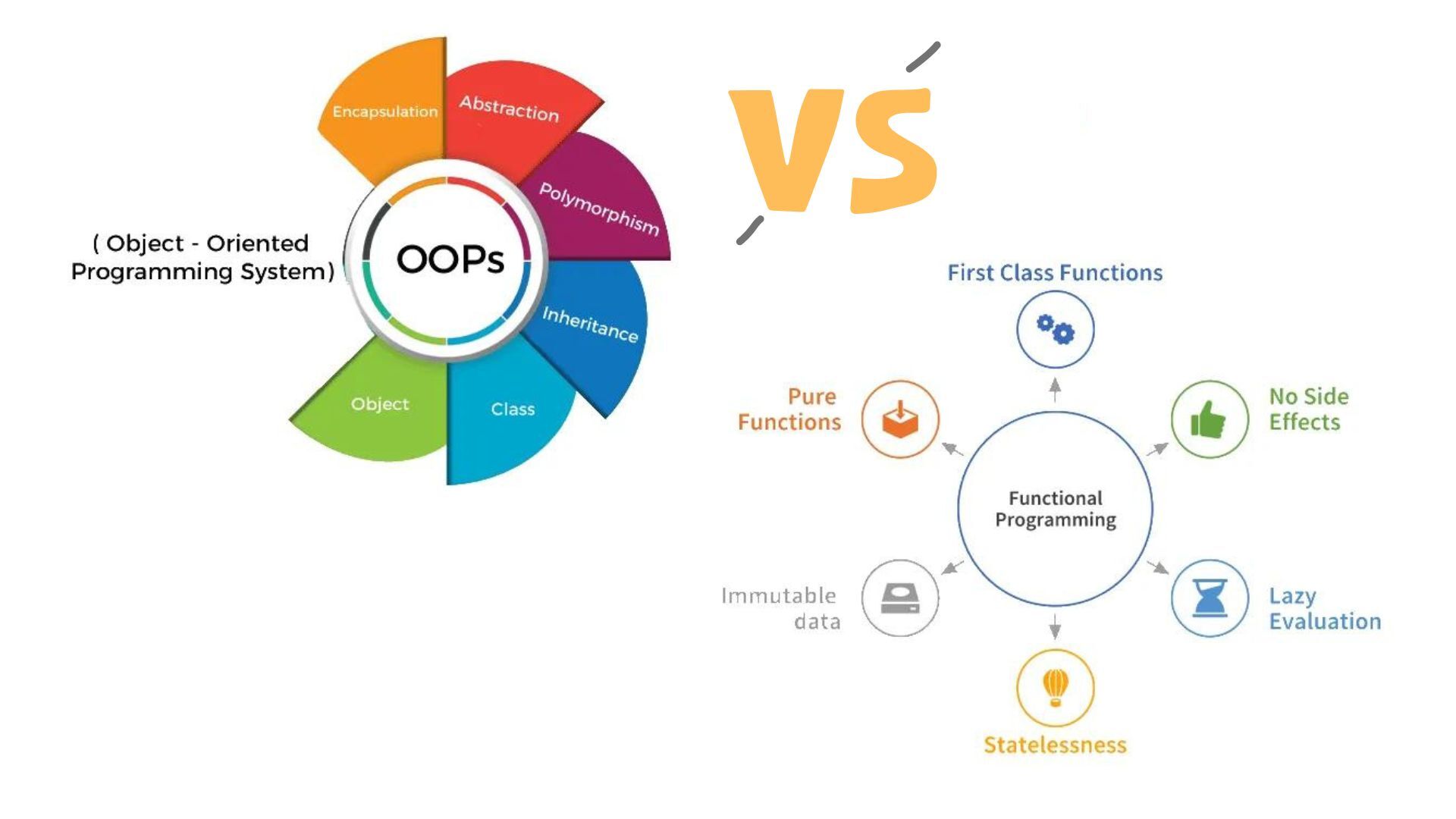
Focus and Structure:
- OOP: Centers around objects and classes. Each object represents a real-world entity with attributes (data) and methods (behavior).
- PP: Focuses on functions and variables, emphasizing a linear and step-by-step procedural flow.
Code Reusability:
- OOP: Provides robust reusability through concepts like inheritance and polymorphism.
- PP: Allows code reuse via function calls, but lacks the structured mechanisms provided by OOP.
Complexity Handling:
- OOP: Best suited for complex, large-scale applications due to its modular structure.
- PP: Ideal for simpler, smaller tasks with straightforward requirements.
Parameter Management:
- OOP: Leverages encapsulation, reducing the need for passing multiple parameters.
- PP: Functions often require numerous parameters, making it less concise.
Interconnections and Maintenance:
- OOP: Minimizes interdependencies between components, easing maintenance and upgrades.
- PP: Changes in one function may ripple through interconnected functions, complicating debugging.
Core Concepts of OOP
OOP introduces several key principles that enhance code organization, maintainability, and reusability.
1. Encapsulation
Encapsulation bundles data (attributes) and methods (functions) operating on the data into a single unit: the class. This principle also enables information hiding, restricting direct access to some components.
- Example: A
Carclass groups attributes likemodel,color, andyearwith methods such asstart(),stop(), andhonk().
Benefits:
- Reduces complexity by keeping details hidden.
- Increases security by using access control (e.g.,
private,public).
2. Abstraction
Abstraction hides the implementation details of an object, exposing only the essential features. This allows developers to interact with complex systems through a simple interface.
- Real-world Example: Driving a car. You only need to know how to steer, accelerate, and brake; the intricate workings of the engine are hidden.
- In Programming: Abstract classes and interfaces are used to implement abstraction.
Benefits:
- Simplifies interactions with objects.
- Reduces development and maintenance efforts.
3. Inheritance
Inheritance allows a class (child) to acquire attributes and methods of another class (parent). This promotes reusability and establishes a natural hierarchy.
- Example:
- Parent class:
Animalwith methods likeeat()andsleep(). - Child class:
Doginherits these methods and adds its own, likebark().
- Parent class:
Types of Inheritance:
- Single: One child inherits from one parent.
- Multilevel: A chain where one child class becomes a parent for another.
- Hierarchical: One parent has multiple child classes.
4. Polymorphism
Polymorphism allows methods to take different forms. The same function name can behave differently based on context.
- Example:
- Method Overloading: Multiple methods with the same name but different parameters in a class.
- Method Overriding: A subclass redefines a method from its parent class.
Benefits:
- Enables flexibility and scalability in code.
5. Composition
Composition describes a "has-a" relationship where one class contains an instance of another class.
- Example:
ACarclass may include anEngineobject as an attribute. This promotes modularity by separating responsibilities.
Benefits:
- Encourages code modularity.
- Simplifies debugging and testing.
OOP in Real Life
OOP is deeply embedded in the software systems we use daily.
- Browsers: Use local storage objects with attributes like
lengthand methods likesetItem()orgetItem(). - Applications: A
Phoneclass can represent all smartphones, with attributes likebattery lifeand methods likemakeCall()andtakePhoto().
Access Control Modifiers in OOP
Access modifiers determine the visibility and accessibility of classes, methods, and variables.
- Public: Accessible from any package.
- Private: Accessible only within the same class.
- Protected: Accessible within the same package and by subclasses.
- Default (Package-private): Accessible only within the same package.
Why OOP is Preferred for Complex Applications
- Scalability: Classes can be easily extended.
- Maintainability: Encapsulation and abstraction keep code organized.
- Collaboration: Teams can work on different parts of a project without conflict.
- Reusability: Inheritance and polymorphism reduce redundant code.
- Error Reduction: Changes in one part of the application have minimal impact on others.


Comments
Post a Comment